
See also


 16.10.2026 09:17 AM
Oil looks set to finish the week with its second straight weekly gain as rising supply risks from the Middle East outweigh new releases from emergency reserves. Brent eased toward $105/barrel but is up about 0.5% for the week (it traded near $106.30 on Wednesday). West Texas Intermediate sits around $97 versus $94 on Thursday, and the gap between the two grades has narrowed because cheaper US crude deliveries have supported demand.
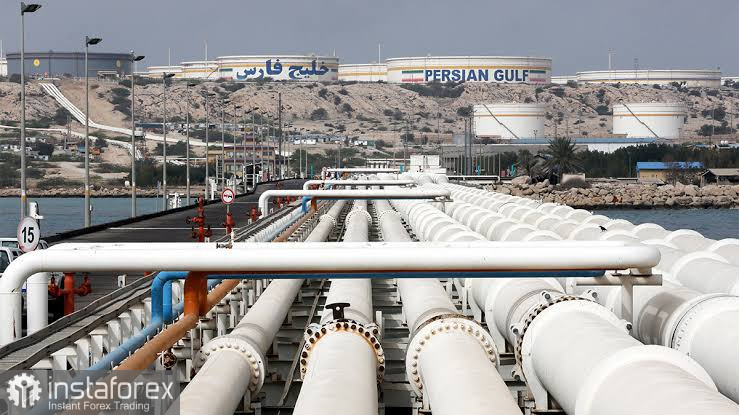
Washington is exerting downward pressure on prices. IEA members agreed to release the remaining 100 million barrels after persistent US requests. Donald Trump is pressing to reduce high gasoline and diesel prices at home because energy costs driven by the US-Iran conflict are a major voter concern ahead of next month's midterm elections.
Uncertainty around physical flows from the Persian Gulf remains elevated, even though the situation seemed to calm earlier in the week. US Central Command confirmed that the Singapore-flagged container ship GFS Pride sank in the Strait of Hormuz this week after being struck by a projectile attributed to the Islamic Revolutionary Guard Corps. Still, more than 40 vessels transited the strait in the past day, so flows continue — which is why the market is reacting cautiously rather than panicking.
Geopolitics remains worrying. Trump did not rule out strikes on Iran after the elections, and CNN reported that the US has developed strike plans that could include new weapons. Many analysts have raised the probability of conflict escalation from 35% to about 65%, arguing the current standoff is increasingly unstable for the US. For oil, that means any easing of tensions may be temporary, and the risk of price spikes remains the main concern.
US data underscore the market's tightness. US crude inventories fell by 8.6 million barrels last week — the largest weekly draw since February — and industry data had pointed to an 11.1 million barrel decline.
That matters for inflation and the Federal Reserve. Expensive oil supports consumer and producer price pressures already visible in September's data, and Kevin Warsh did not promise further action. Thus any Brent advance will bring policy rates back into focus, while price falls would give the dollar and equities a respite.
As long as the US continues to release reserves and the flow of ships through Hormuz persists, Brent will likely trade around $104–106, and WTI will narrow the gap with the European grade. The risk is asymmetric: escalation with Iran or fresh attacks on shipping could quickly push prices above $106, while a sustained decline would probably require a genuine diplomatic breakthrough.
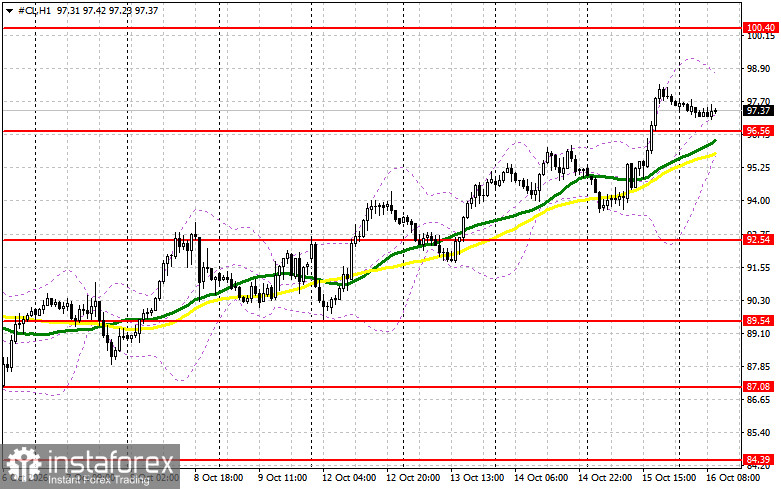
Buyers need to take the nearest resistance at $98 to target $101, above which a breakout will be difficult. The farther upside target is the $104 area. On the downside, bears will try to seize $95; if they succeed, a range break would damage bull positions and push oil down to $92, with a prospect of extending to $89.


