
আরও দেখুন


 09.10.2026 07:07 PM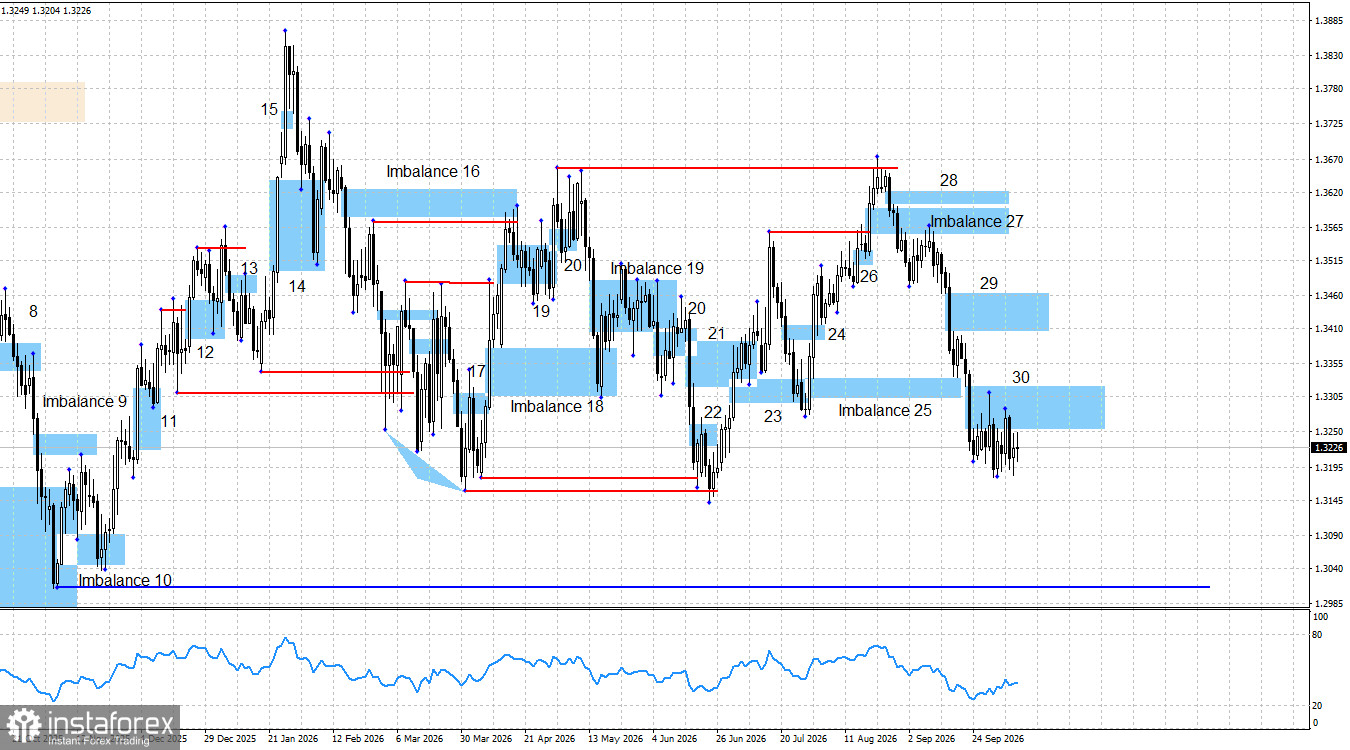
The GBP/USD pair spent eleven days in an almost uninterrupted decline, but for the past two weeks, bulls have been putting up desperate resistance against bears, preventing them from advancing further. Any corrective rebound is capped by Bearish Imbalance 30, which acts as a resistance zone. Bulls currently have few reasons for optimism. Last weekend, a war of liberation began in Yemen, while the market reacted to Friday's Nonfarm Payrolls report and unemployment rate only superficially. The pound had opportunities to gain last week following a series of hawkish statements from Bank of England policymakers and a strong second-quarter GDP report. However, as the market has shown, this information brought the pound no tangible benefits. In my view, bulls are displaying weakness that is difficult to explain. The news backdrop for the euro and the pound is not so unfavorable that both currencies should be unable to post even modest gains. However, non-economic factors appear to be taking priority in the market, including the overall attractiveness of particular economies, countries, and currencies, as well as liquidity and capital flows between markets.
It is worth noting that traders expect the Bank of England to tighten monetary policy twice, just as they expect the Federal Reserve to do. To reiterate, the dot plot actually points to just one rate hike, and yesterday's FOMC minutes confirmed that most central bank policymakers expect only one increase in interest rates. Consequently, the Bank of England could ultimately raise rates even more aggressively than the Fed in the coming months, which clearly should not support further gains in the US dollar. Yet the pound cannot even manage a corrective rebound.
Despite the unfavorable picture for the British pound that has emerged in recent weeks, the dollar has also suffered numerous setbacks over the past several months. If the Fed had not decided to raise interest rates in September and signaled its willingness to continue tightening monetary policy, the expectation would still be for the US currency to decline. That remains the expectation, but from lower levels. For now, however, the bulls' opportunities are limited to sweeping liquidity below the July 28 or June 24 lows and forming new bullish patterns, which would require a confident upward move. The chart clearly shows that most reversals over the past year occurred after liquidity sweeps, so this appears to be a good opportunity. The reaction to Bearish Imbalance 30 has been unimpressive so far, which could indicate that bearish momentum is fading. This may offer the pound an opportunity. A small one, but an opportunity nonetheless.
Do the bears have further room to advance? In my view, their prospects are limited, but it must be acknowledged that the dollar remains in a favorable phase and has excellent chances of extending its gains until Imbalance 30 is invalidated. Chart analysis shows that the overall picture remains fully bearish following the liquidity sweep above the May highs. The pound reacted to Bearish Imbalance 27, triggering a 320-point decline. Now, Bearish Imbalance 30 provides another basis for expecting the pound to fall further.
There was no significant economic news on Friday, which explains the relatively low level of trader activity today. At the same time, the market has been trading within a range for more than two weeks, with neither bulls nor bears currently holding a clear advantage. Neither side has established control, but the bears remain better positioned in terms of future prospects. The bulls have managed only to halt the pound's relentless decline.
The overall news backdrop remains such that, over the long term, a decline in the US dollar is still the only outcome that can be anticipated. The war between Iran and the United States has not changed these expectations. Geopolitical developments prompted the market to focus on the dollar's safe-haven status for several months, but the conflict has already passed its most acute phase. The future course of FOMC monetary policy remains uncertain, while the market continues to anticipate further tightening. This is the main reason for the bears' optimism. However, traders continue to overlook the prospect of monetary policy tightening by the Bank of England, as evidenced by several recent speeches from Monetary Policy Committee (MPC) members. Inflation in the United Kingdom is rising, as it is around the world, leaving the Bank of England with few alternatives to raising interest rates as well.
On October 12, the economic calendar contains no noteworthy events. The economic news backdrop is therefore expected to have no impact on market sentiment on Monday.
The long-term technical picture for the pound remains bullish. Bears have held the initiative in recent weeks, but the market is still clearly range-bound, even on the daily chart. The liquidity sweep below the May 1 swing low triggered a new decline, while a sell signal within Inverted Imbalance 27 allowed the downward move to continue. As a result, the pound's decline could extend toward the June lows. Liquidity could then be swept below those lows, followed by a reversal in favor of sterling.
The reaction to Imbalance 30 remains weak at present, and this is where the pound's main opportunity lies. However, for traders to consider a sustained rise, something more substantial is needed than a weak reaction to a bearish pattern during a bearish impulse. The pound and the bulls need a structural break—at the very least, the invalidation of Imbalance 30.


